

Key Takeaways
- Preparing home selling documents for your real estate agent before listing your property helps speed up the selling process, reduces delays, and gives buyers greater confidence.
- Keeping your paperwork complete, organized, and easy to access allows your real estate agent to market your home effectively and manage the transaction with fewer complications.
Why Preparing Home Selling Documents Matters
Preparing home selling documents for your real estate agent is one of the most important steps before putting your property on the market. When your documents are organized, your real estate agent can begin marketing your home without unnecessary delays. Buyers also feel more confident when they know the property’s information is complete and available.
Selling a home involves more than cleaning the property and taking photos. It also requires accurate paperwork that confirms ownership, explains the condition of the home, and supports the legal transfer of the property. If documents are missing, the selling process can slow down or create avoidable issues later.
By gathering your paperwork early, you help your real estate agent answer buyer questions quickly and keep the sale moving smoothly from listing to closing.
Why Does Your Real Estate Agent Need These Documents?
Your real estate agent uses your documents throughout the selling process. They help verify important details, prepare marketing materials, complete legal paperwork, and communicate with buyers.
Your documents can help your agent:
- Confirm legal ownership of the property.
- Verify property details.
- Prepare accurate listings.
- Answer buyer questions.
- Meet legal and local disclosure requirements.
- Reduce delays during negotiations.
- Support a smooth closing process.
The more complete your records are, the easier it becomes for your agent to represent your property professionally.
What Are The Most Important Home Selling Documents?
Several documents are commonly needed when selling a home. Some may vary depending on your location and property type, but many are required in most real estate transactions.
Property Ownership Documents
Ownership documents prove that you legally own the property and have the right to sell it.
These documents may include:
- Property deed
- Title documents
- Ownership certificates where applicable
- Records of previous ownership transfers
These records help confirm ownership before the transaction moves forward.
Identification Documents
Your real estate agent may need identification to prepare contracts and verify your identity.
Common documents include:
- Government-issued identification
- Tax identification documents where required
- Documents confirming your legal name if it has changed
Always provide current and valid identification.
Mortgage Information
If your home still has a mortgage, your agent will need basic loan information.
Useful documents include:
- Mortgage statements
- Lender contact details
- Loan account information
- Payoff request information if available
This helps estimate the remaining balance before the property is sold.
Property Tax Records
Property tax records provide buyers with useful information about the property.
These records often include:
- Recent tax statements
- Property identification numbers
- Assessment information
Your agent may also use these records when preparing listing information.
Which Property Records Should You Gather?
Besides ownership documents, several property records can help buyers understand your home better.
Home Improvement Records
Keep records of improvements made to your property.
These may include:
- Renovation documents
- Remodeling records
- Contractor invoices
- Completion certificates
- Warranty information
These records show that improvements were completed and may answer buyer questions.
Repair And Maintenance Records
Maintenance records help demonstrate that the property has been cared for over time.
Examples include:
- Roof repairs
- Plumbing maintenance
- Electrical work
- Heating and cooling servicing
- Appliance maintenance
Keeping these records organized makes it easier to discuss the property’s condition.
Appliance Manuals And Warranties
If appliances are included with the sale, gather:
- User manuals
- Warranty information
- Installation documents
These items can be useful for future homeowners after the purchase.
What Disclosure Documents Should You Prepare?
Disclosure documents explain known facts about the property’s condition.
Requirements vary depending on local laws, but sellers are generally expected to provide honest information about known issues.
Disclosures may include:
- Structural concerns
- Water damage
- Past repairs
- Pest issues
- Environmental concerns
- Boundary matters
- Shared access arrangements where applicable
Providing complete information helps build trust and reduces misunderstandings.
How Can You Organize Home Selling Documents?
Keeping documents organized saves time throughout the selling process.
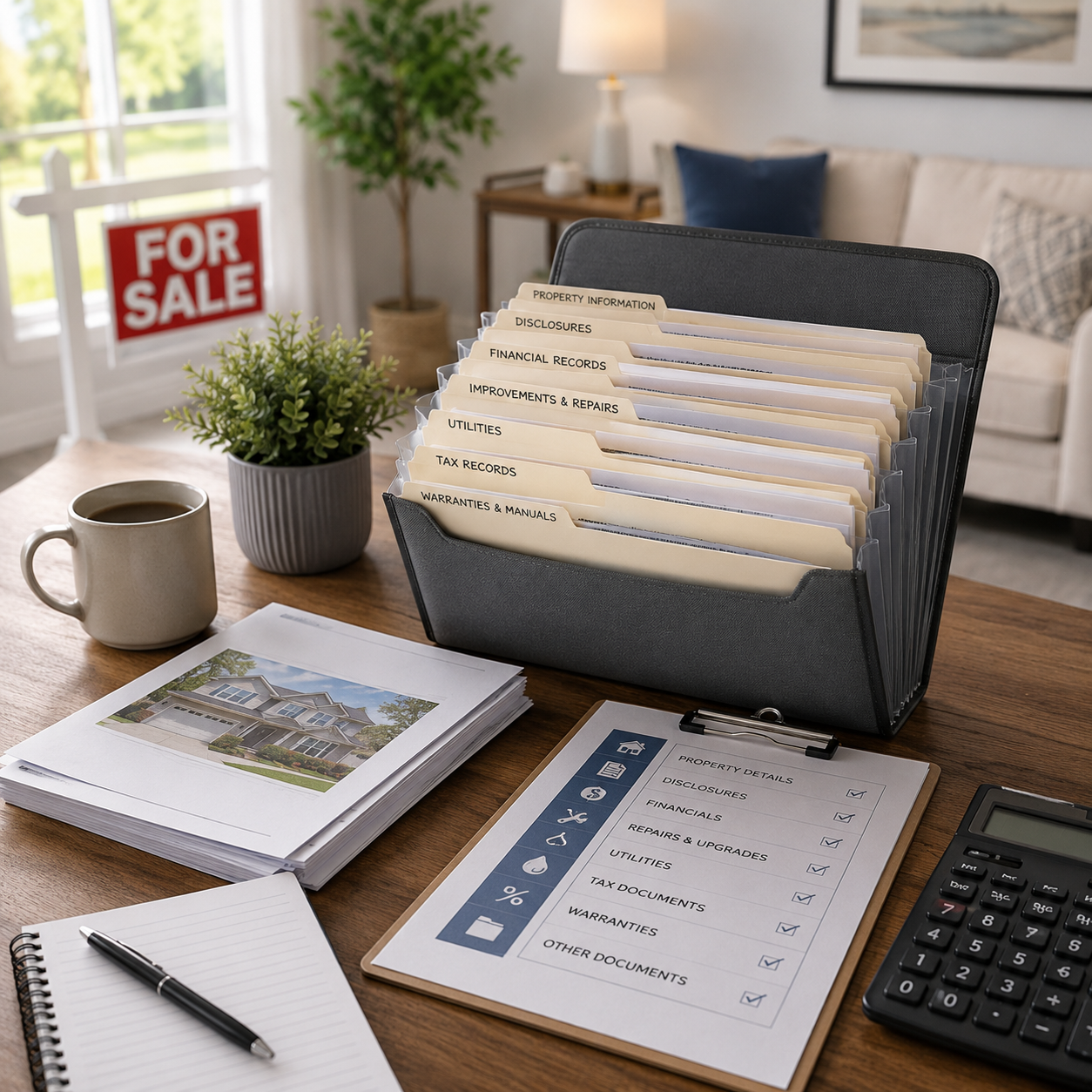
Consider creating separate folders for different categories.
Examples include:
- Ownership documents
- Financial records
- Property tax records
- Repair history
- Renovation records
- Inspection reports
- Warranty documents
- Utility information
- Homeowners association documents if applicable
Digital copies are also helpful. Scanning important documents allows you to share them quickly with your real estate agent when needed.
Should You Prepare Inspection Reports?
Inspection reports are not always required before listing a property, but having them available can be helpful.
If you already have inspection reports, keep them with your selling documents.
These reports may cover:
- Structural condition
- Electrical systems
- Plumbing systems
- Heating and cooling systems
- Roofing
- Foundation
- Safety features
Your real estate agent can explain whether sharing these reports is appropriate in your situation.
What Financial Documents Should Be Ready?
Financial documents often become important during the transaction.
You may need:
- Mortgage statements
- Property tax statements
- Utility records
- Homeowners association documents if applicable
- Insurance information where required
- Receipts for major improvements
Having these records ready allows questions to be answered without unnecessary delays.
How Do Homeowners Association Documents Help?
If your property belongs to a homeowners association, buyers often need additional information.
Documents may include:
- Community rules
- Association fees
- Meeting information where available
- Property restrictions
- Shared facility information
Providing these documents early helps buyers understand the community before making a decision.
What Digital Documents Should You Keep?
Many documents are now stored electronically.
It is helpful to maintain digital copies of:
- Property records
- Mortgage statements
- Inspection reports
- Repair invoices
- Tax records
- Warranty information
- Disclosure documents
Store digital files in clearly named folders and keep backup copies whenever possible.
How Can You Avoid Common Document Mistakes?
Simple mistakes can slow the selling process.
Try to avoid:
- Missing ownership records
- Outdated identification
- Incomplete disclosure forms
- Lost repair receipts
- Unorganized paperwork
- Missing signatures
- Waiting until the property is listed before collecting documents
Preparing documents early gives you time to locate anything that may be missing.
When Should You Start Preparing Home Selling Documents?
The best time to organize your paperwork is before contacting your real estate agent or immediately after deciding to sell.
Starting early gives you enough time to:
- Request replacement documents if needed.
- Update missing information.
- Organize digital files.
- Review disclosure requirements.
- Locate maintenance records.
- Gather warranties and manuals.
Early preparation allows your real estate agent to focus on marketing your property instead of searching for missing paperwork.
How Can Your Real Estate Agent Help With Documentation?
Your real estate agent understands which documents are commonly required during the selling process.
They can help you:
- Identify missing paperwork.
- Explain local documentation requirements.
- Prepare disclosure forms.
- Coordinate with legal professionals if necessary.
- Organize documents for buyers.
- Keep paperwork updated throughout the transaction.
Working together helps reduce stress and keeps the process moving efficiently.
Moving Forward With A Well-Prepared Sale
Preparing your home selling documents before listing your property is one of the best ways to support a successful transaction. Complete and organized paperwork allows your real estate agent to market your home with confidence, answer buyer questions quickly, and reduce unnecessary delays throughout the process.
Taking the time to gather important records now can make every stage of the sale smoother. If you would like more helpful real estate advice, sign up on this website to receive regular updates and practical guidance. You can also get in touch with a qualified real estate professional for advice that fits your specific situation.