

Key Takeaways
-
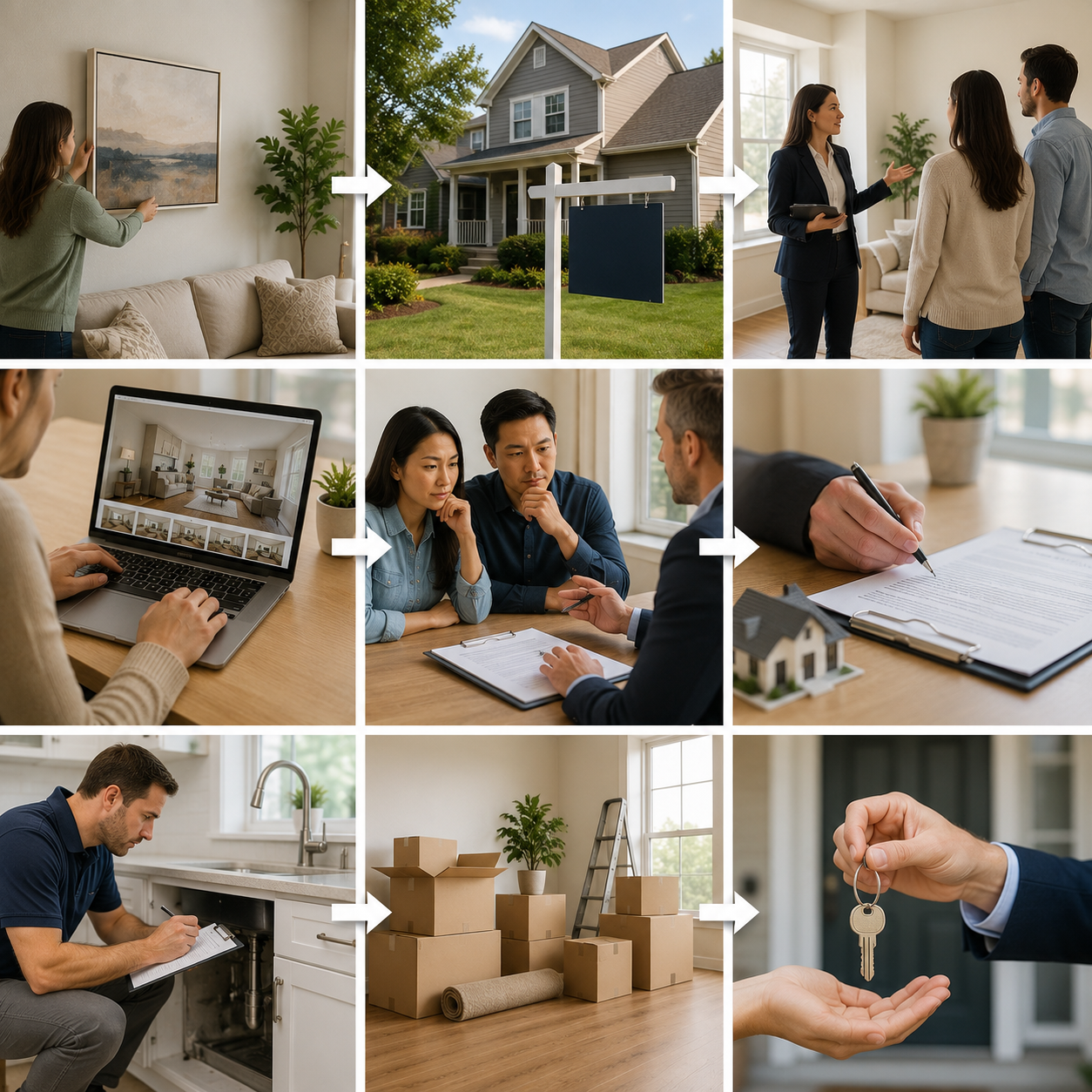
The home selling process follows a series of important steps, from preparing your property and listing it for sale to accepting an offer, completing inspections, and handing over the keys at closing.
-
Staying organized, responding quickly, and understanding each stage helps you avoid delays and gives you more confidence throughout the selling journey.
Understanding The Home Selling Process From The Beginning
The home selling process can seem complicated when you first decide to sell your property. However, once you understand each stage, it becomes much easier to manage. Every step has a purpose, from preparing your home before listing to completing the final paperwork on closing day.
As a seller, you will work through several milestones before you officially transfer ownership. During this time, you may prepare your property, attract buyers, negotiate offers, complete inspections, satisfy legal requirements, and finalize the sale. Knowing what happens next helps you make informed decisions and reduces unnecessary stress.
Why Is Preparation Important Before Listing Your Home?
Preparing your property before listing is one of the most valuable parts of the home selling process. Buyers often make quick decisions based on their first impression, so presenting your home well can increase interest.
Before your home goes on the market, consider focusing on the following:
-
Clean every room thoroughly.
-
Remove unnecessary personal items.
-
Complete minor repairs.
-
Improve curb appeal by maintaining the yard and entrance.
-
Organize storage areas.
-
Ensure lighting makes every room feel bright.
-
Address any maintenance issues that could concern buyers.
Taking time to prepare your home can also reduce questions during inspections later in the selling process.
How Does Listing Your Home Begin?
Once your home is ready, the next step is creating the listing. This introduces your property to potential buyers and allows them to learn about its features.
A listing usually includes:
-
High-quality photographs
-
A detailed property description
-
Information about important features
-
Property measurements and layout
-
Local community highlights
A well-written listing should clearly explain what makes your property attractive while remaining accurate. Buyers appreciate honest descriptions because they create realistic expectations before scheduling a viewing.
After the listing becomes active, your property becomes visible to buyers searching for homes that match their needs.
What Happens After Your Home Goes On The Market?
Once your listing is live, interested buyers may begin requesting viewings.
During this stage, you should keep your property clean and ready for visitors whenever possible. Buyers often notice small details, so maintaining a welcoming appearance remains important throughout the marketing period.
Viewings may happen through:
-
Private appointments
-
Scheduled open houses
-
Virtual tours
-
Video walkthroughs
Each viewing gives buyers an opportunity to imagine themselves living in the property. The better your home is presented, the stronger that impression may become.
How Can You Handle Offers During The Home Selling Process?
Receiving an offer is an exciting milestone, but it is not always the end of the home selling process.
An offer usually includes details such as:
-
Proposed purchase amount
-
Requested closing timeline
-
Financing method
-
Conditions that must be met before closing
-
Requested repairs or additional terms
You do not have to accept the first offer immediately. Instead, you can carefully review every detail before making your decision.
Your options generally include:
-
Accepting the offer
-
Rejecting the offer
-
Making a counteroffer
-
Negotiating certain terms
Successful negotiations often focus on more than the purchase price. Closing dates, inspection conditions, included items, and other contract terms may also influence your final decision.
Why Do Inspections And Appraisals Matter?
After an offer is accepted, buyers commonly complete inspections and, when needed, an appraisal.
An inspection helps identify the overall condition of the property. The inspector may review areas such as:
-
Roof
-
Foundation
-
Plumbing
-
Electrical systems
-
Heating and cooling systems
-
Windows and doors
-
Structural components
If issues are found, buyers may request repairs or negotiate another solution.
An appraisal, when required, estimates the property’s market value. This helps confirm that the agreed purchase amount matches the home’s estimated value.
Although both steps can create additional discussions, they are a normal part of many real estate transactions.
What Should You Expect During Negotiations After Inspections?
Inspection findings do not always mean the sale will fail. Instead, they often begin another round of discussions between buyer and seller.
Possible outcomes include:
-
Completing requested repairs
-
Offering financial credits
-
Adjusting the purchase terms
-
Leaving the agreement unchanged
-
Reaching another mutually acceptable solution
Remaining flexible while protecting your interests can help keep the transaction moving toward closing.
How Do Financing And Buyer Approval Affect The Timeline?
Many buyers purchase a home using financing rather than paying entirely with their own funds.
During this stage, the buyer works with their lender to complete all necessary financial requirements. The lender reviews documents, verifies information, and confirms the buyer qualifies for the loan.
This process may include:
-
Income verification
-
Credit review
-
Property appraisal review
-
Final underwriting
-
Loan approval
As the seller, you may simply need to provide requested documents and remain available if additional information becomes necessary.
Understanding that financing takes time can help you remain patient while waiting for final approval.
What Documents Are Needed Before Closing?
As the closing date approaches, several legal and administrative documents must be completed.
While requirements vary depending on location, sellers commonly prepare documents involving:
-
Property ownership
-
Required disclosures
-
Transfer documentation
-
Tax-related information
-
Settlement paperwork
-
Mortgage payoff information, if applicable
Reviewing every document carefully before signing helps prevent misunderstandings later.
If questions arise, ask for clarification before completing any paperwork.
What Happens During The Final Walkthrough?
Shortly before closing, buyers often perform a final walkthrough.
This visit confirms that:
-
The property remains in agreed condition.
-
Required repairs have been completed.
-
Included appliances or fixtures remain in place.
-
No unexpected damage has occurred.
-
The home is ready for transfer.
The walkthrough is usually brief but serves as an important final check before ownership officially changes.
Keeping your property clean and empty, unless otherwise agreed, helps ensure this stage goes smoothly.
How Does Closing Day Work?
Closing day is the final major step in the home selling process.
During closing, all remaining paperwork is completed, ownership transfers to the buyer, and financial obligations are settled.
Several tasks typically occur during this stage:
-
Final document review
-
Signature of legal documents
-
Transfer of ownership records
-
Payment processing
-
Settlement of outstanding obligations
-
Confirmation that all conditions have been satisfied
Once everything is completed, the sale officially becomes final.
Although closing involves several documents, the process generally follows a structured sequence designed to protect both buyer and seller.
When Do You Finally Hand Over The Keys?
Handing over the keys marks the successful completion of your home sale.
Before leaving the property, make sure you have:
-
Removed all personal belongings.
-
Cleaned the home.
-
Left any agreed appliances or fixtures.
-
Provided garage remotes, security codes, and access devices if required.
-
Returned every key that belongs to the property.
-
Confirmed any remaining responsibilities have been completed.
Once the keys are transferred, the buyer officially takes possession according to the agreed terms.
This final step represents the end of your responsibilities as the property’s owner.
How Can You Avoid Common Delays In The Home Selling Process?
While many transactions proceed smoothly, delays sometimes occur.
You can reduce potential problems by:
-
Responding quickly to requests.
-
Keeping documents organized.
-
Completing agreed repairs promptly.
-
Maintaining clear communication.
-
Being flexible with scheduling.
-
Preparing your property before inspections.
-
Reviewing paperwork carefully before signing.
Planning ahead often makes every stage easier and helps the sale move forward with fewer interruptions.
What Should You Remember Throughout The Home Selling Process?
The home selling process is made up of several connected steps, each bringing you closer to a successful sale. Preparing your property, creating a strong listing, managing buyer interest, reviewing offers, completing inspections, handling financing requirements, and attending closing all play important roles.
Understanding what happens at every stage allows you to make confident decisions while reducing uncertainty. Staying organized, communicating clearly, and preparing for each milestone can help create a smoother experience from listing day until you finally hand over the keys.
If you would like more practical guidance on buying or selling property, sign up on our website for expert advice and updates. If you need personalized support, get in touch with a qualified real estate professional who can guide you through every step of your selling journey.