

Key Takeaways
-
Organizing every home selling document before listing helps prevent delays, reduces stress, and makes the closing process much smoother.
-
Creating a complete document checklist and keeping records updated allows you to answer buyer questions quickly and move through each stage with confidence.
Preparing For A Smooth Home Sale
Getting your home selling documents organized before listing your property is one of the best ways to prepare for a successful sale. Buyers often ask questions about the home’s condition, ownership, maintenance, and improvements. If you already have the right paperwork ready, you can respond quickly and keep the process moving.
Selling a home involves much more than putting a sign in the yard or uploading photos online. There are legal, financial, and property-related records that may be needed from the moment your home is listed until the final closing. By gathering everything early, you reduce the chance of unexpected delays and make the experience easier for everyone involved.
Whether this is your first sale or you have sold property before, staying organized can help you feel more confident throughout the transaction.
Why Are Home Selling Documents So Important?
Every real estate transaction requires paperwork. These documents help verify ownership, explain the condition of the property, and support important details about the home.
Having organized records can help you:
-
Answer buyer questions quickly.
-
Reduce delays during negotiations.
-
Support information included in your listing.
-
Help your real estate professional prepare accurate paperwork.
-
Make inspections and appraisals easier.
-
Speed up the closing process.
-
Reduce the risk of missing important deadlines.
Being prepared also shows buyers that you have taken good care of your property.
Which Home Selling Documents Should You Gather First?
Start by collecting the most important ownership and legal records.
These commonly include:
-
Property deed
-
Mortgage information
-
Property tax records
-
Homeowners association documents if applicable
-
Property survey if available
-
Title insurance documents if you have them
-
Identification required during the selling process
Place these documents in one secure location so they are easy to find whenever needed.
What Property Records Should You Include?
Buyers often want to understand the history of the property.
Helpful records may include:
-
Building permits
-
Records of renovations
-
Inspection reports
-
Warranty information for major systems or appliances
-
Roof replacement records
-
Heating and cooling maintenance records
-
Plumbing or electrical upgrades
-
Pest treatment records
Even if every document is not requested, having them available demonstrates that your home has been maintained responsibly.
How Can Maintenance Records Help?
Maintenance records can build buyer confidence.
Keep documents related to:
-
Routine servicing
-
Equipment inspections
-
Seasonal maintenance
-
Repairs completed over the years
-
Landscaping improvements
-
Exterior maintenance
If you have manuals for installed systems or appliances that will remain with the home, keep those together as well. Buyers often appreciate receiving them after closing.
What Financial Documents Should You Prepare?
Several financial records may become important during the sale.
Examples include:
-
Mortgage payoff information
-
Property tax statements
-
Utility information
-
Home insurance details when requested
-
Receipts for major improvements
-
Records related to special assessments if applicable
These documents can help answer financial questions that may arise during negotiations.
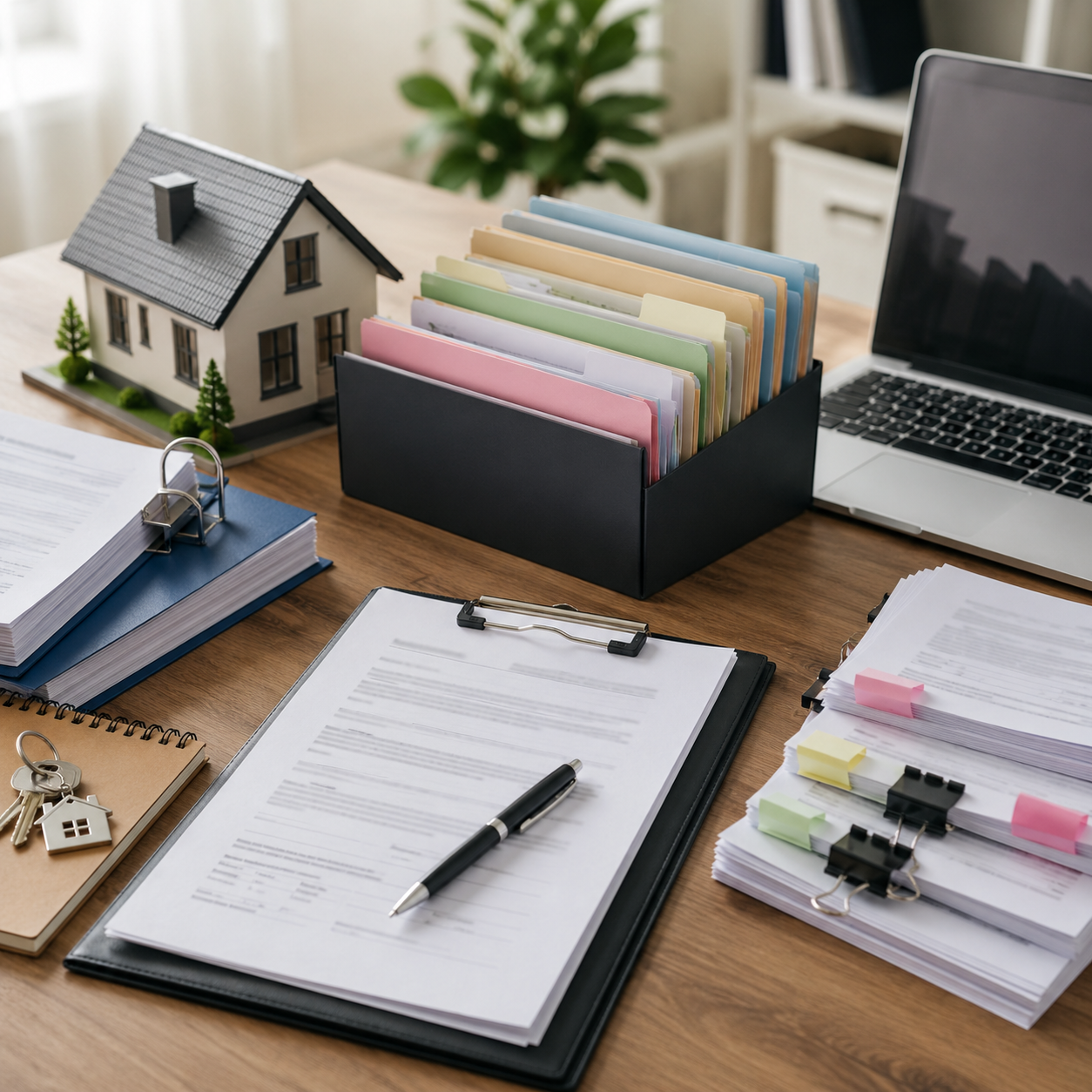
How Should You Organize Home Selling Documents?
Creating an organized system saves time.
You can organize your paperwork by using:
-
Clearly labeled folders
-
Digital copies stored securely
-
Separate sections for legal, financial, maintenance, and repair records
-
A checklist showing which documents are complete
Many sellers choose to keep both physical and digital copies. This provides an extra layer of protection if one version becomes unavailable.
Should You Create Digital Copies?
Yes. Digital copies make it easier to access documents whenever they are needed.
When creating digital files:
-
Scan documents clearly.
-
Name files consistently.
-
Store them in secure cloud storage or encrypted devices.
-
Back up important files.
-
Protect sensitive information with strong passwords.
Digital organization can make sharing documents with your real estate professional much faster.
What Should You Check Before Listing?
Before your home officially goes on the market, review your records carefully.
Ask yourself:
-
Are all documents complete?
-
Are names correct?
-
Are addresses accurate?
-
Have outdated records been replaced?
-
Are repair receipts included?
-
Do you know where every important document is stored?
Taking time to review everything before listing can prevent unnecessary stress later.
How Can You Prepare For Buyer Questions?
Buyers may ask questions about many parts of your property.
Common topics include:
-
Age of major systems
-
Previous repairs
-
Renovations
-
Utility costs
-
Property boundaries
-
Neighborhood requirements
-
Home improvements
Having documents available allows you to provide accurate answers rather than relying on memory.
What Happens During The Inspection Stage?
The inspection is often one of the busiest parts of the home selling process.
Inspectors may identify items that require explanation or supporting paperwork.
You may be asked to provide records related to:
-
Repairs
-
Maintenance
-
Renovations
-
Permits
-
Warranties
Organized documentation helps clarify work that has already been completed.
Why Are Repair Records Valuable?
Repair records show that problems have been addressed properly.
Include documents for:
-
Roofing repairs
-
Plumbing work
-
Electrical repairs
-
Foundation work
-
Heating and cooling servicing
-
Appliance repairs
-
Structural improvements
Keep invoices, completion reports, and warranty information together whenever possible.
What Documents Help During Appraisal?
Appraisers evaluate many aspects of your property.
Helpful supporting documents include:
-
Improvement records
-
Permit documentation
-
Renovation details
-
Property survey
-
Floor plans if available
These records may help explain updates that could affect the property’s overall value.
How Can You Protect Sensitive Information?
Not every document should be shared openly.
Protect personal information by:
-
Removing unnecessary account numbers.
-
Keeping financial information secure.
-
Sharing documents only with authorized parties.
-
Using password-protected digital files.
-
Locking physical records in a secure location.
Protecting your information is just as important as keeping it organized.
What Common Mistakes Should You Avoid?
Many sellers wait until the last minute to collect paperwork.
Try to avoid these common mistakes:
-
Losing original documents.
-
Forgetting maintenance records.
-
Mixing personal paperwork with property records.
-
Ignoring missing permits.
-
Not creating backup copies.
-
Waiting until closing to search for documents.
-
Failing to update outdated records.
Planning ahead usually saves time and reduces stress.
How Can A Home Selling Document Checklist Help?
A checklist helps you monitor your progress from beginning to end.
Your checklist may include:
-
Ownership documents
-
Mortgage records
-
Tax records
-
Survey
-
Insurance information
-
Maintenance history
-
Repair receipts
-
Renovation permits
-
Warranty documents
-
Utility information
-
Homeowners association documents
-
Inspection reports
-
Identification
-
Closing-related paperwork
As each document is collected, mark it as complete. This makes it easier to see what still needs attention.
What Should You Keep Ready For Closing Day?
Closing day requires several important documents.
Although requirements may vary, you may need:
-
Personal identification
-
Final signed documents
-
Mortgage payoff information
-
Property keys
-
Garage door openers
-
Security codes
-
Appliance manuals
-
Warranty documents
-
Any agreed property records
Keeping these items together helps avoid last-minute confusion.
How Can You Stay Organized Throughout The Sale?
Organization is not something you do only once.
Continue updating your document folder as the sale progresses.
Good habits include:
-
Filing new paperwork immediately.
-
Saving digital copies of signed documents.
-
Responding promptly to document requests.
-
Keeping communication records organized.
-
Reviewing your checklist regularly.
A little effort throughout the process prevents large problems later.
Moving Toward A Successful Closing
Preparing your home selling documents before listing is one of the smartest ways to simplify your real estate journey. Organized records help buyers feel more confident, support your property information, and reduce the chances of delays during inspections, negotiations, and closing. By creating a clear document system early, you give yourself more control over the selling process and make each step easier to manage.
If you would like more practical real estate advice, sign up on this website for helpful updates and guides. If you need support with your specific situation, get in touch with a qualified real estate professional who can provide guidance throughout your home sale.