

Key Takeaways
- By systematically searching, comparing, and interviewing, you can identify a Zillow Premier Agent who matches your needs.
- Prepare your criteria and questions in advance to ensure a clear, confident agent selection process.
Finding the right real estate agent is crucial when buying or selling a home. Zillow Premier Agents are featured professionals on Zillow’s platform, and knowing how to select the best fit for your goals can make a big difference. This guide walks you through the steps to compare, evaluate, and interview Premier Agents with confidence.
What Is a Zillow Premier Agent?
Premier Agent definition
A Zillow Premier Agent is a real estate professional who participates in Zillow’s advertising program, gaining enhanced visibility on the platform. These agents are displayed more prominently next to listings and have access to tools that help connect with buyers and sellers.
How agents become Premier Agents
Agents become Premier Agents by subscribing to Zillow’s program. They do not undergo special vetting by Zillow but typically invest in additional marketing. Their participation ensures their profiles are highlighted on property listings in their serviced markets.
Typical roles and responsibilities
Premier Agents handle tasks standard to the real estate profession. This includes guiding clients through the buying or selling process, providing insights on market conditions, negotiating offers, drafting contracts, and managing timelines. They represent either buyers or sellers, depending on your needs.
Why Consider a Zillow Premier Agent?
Potential benefits for buyers and sellers
As a buyer or seller, working with a Premier Agent gives you access to professionals who prioritize visibility and client outreach. These agents are often proactive in responding to inquiries and may have strong knowledge of the local area.
How Premier Agents are featured on Zillow
Premier Agents appear prominently alongside listings on Zillow. When you view a property, you may notice a “Contact Agent” button or a list of recommended agents. Premier Agents are usually among the first names or images you see.
Factors to weigh when evaluating options
While Premier Agent status means higher visibility, it’s important to evaluate each agent on factors beyond their placement. Consider experience, communication style, local expertise, and past client feedback to make an informed decision.
What You’ll Need to Start
List of must-have agent criteria
Before you begin your search, outline your essential criteria. Examples include:
- Local area knowledge
- Relevant transaction experience (buying, selling, condos, single-family homes, etc.)
- Strong communication skills
- Positive client reviews
- Availability for your desired timeline
Setting your goals and expectations
Be clear on your primary goals, such as price range, preferred neighborhoods, and timeline for buying or selling. Knowing what you want helps you find an agent whose approach aligns with your objectives.
Questions to consider before searching
Ask yourself:
- Am I looking to buy, sell, or both?
- Do I need specialized guidance (such as first-time homebuyer support or investment property advice)?
- What style of communication do I prefer (phone, email, text)?
These details will help guide your search and interviews.
Step 1: Search for Local Agents
Using Zillow search filters
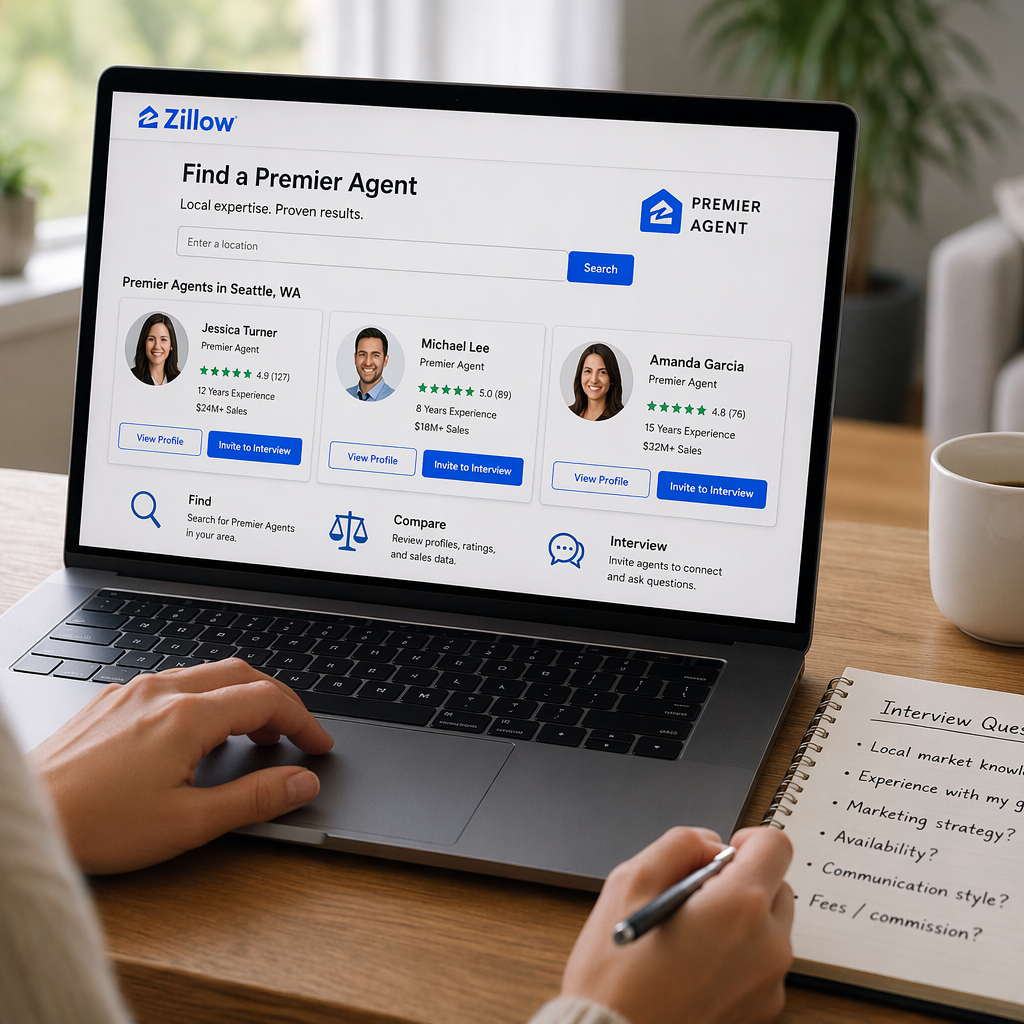
Start by entering your location on Zillow and navigating to the “Agent Finder” tool. Use filters based on specialties, language, years of experience, and transaction types to narrow your results.
Reviewing agent profiles
Examine detailed agent profiles, which include biographies, service areas, active listings, and contact options. Take note of agents with experience in your property type and price range.
Identifying Premier Agents on listings
When viewing property listings, look for the “Premier Agent” logo or badge next to an agent’s name or photo. Premier Agents may also be highlighted on the agent search results page.
Step 2: Compare Agent Qualifications
Reviewing experience and specialties
Assess each agent’s background. Look for indicators such as number of years in the business, transaction volume, local market focus, and relevant certifications.
Reading past client reviews
Reviews can give insights into an agent’s strengths and the client experience. Pay attention to recurring themes, such as responsiveness, professionalism, and local expertise.
Assessing communication style
Consider how agents respond to inquiries. Are their replies timely and clear? Do they seem approachable and open to questions? Effective communication is key to a successful transaction.
Step 3: Interview Your Top Choices
Scheduling calls or meetings
Once you have a shortlist, reach out to schedule introductory calls or meetings. Many agents offer in-person or virtual appointments depending on your preference and availability.
Sample interview questions to ask
Come prepared with questions tailored to your needs, such as:
- How familiar are you with my target neighborhood?
- What is your availability if I need to see a home quickly?
- How do you handle negotiations and multiple offers?
- What services do you provide beyond listing or showing properties?
How to assess agent fit for your needs
During your conversation, evaluate how well the agent listens to your goals, explains processes, and answers your questions. Choose a professional who aligns with your expectations and communicates in a way that feels comfortable.
What Questions Should You Ask Agents?
Essential questions for buyers
- How do you help buyers navigate competitive markets?
- What are your steps for writing strong purchase offers?
- How do you assist with inspections and closing?
Key questions for sellers
- What strategies do you use to market homes online and offline?
- How do you help set the listing price?
- What is your process for managing showings and feedback?
Red flags to watch out for
Stay alert for vague answers, reluctance to provide references, or inconsistent communication. These may indicate an agent who is not fully committed to your needs.
How to Avoid Common Mistakes
Relying too much on online ratings
While online reviews are helpful, don’t base your entire decision on star ratings. Dig deeper to understand the reasons behind high or low ratings.
Skipping background and license checks
Always verify that an agent holds an active license in your state. You can typically do this on your state’s real estate regulator website.
Not clarifying agent duties upfront
Discuss and agree on the agent’s responsibilities early on. Make sure you’re on the same page about services, communication frequency, and expectations.
What If You Want to Work With Multiple Agents?
Pros and cons of exclusive agreements
Some agents ask clients to sign a contract for exclusive representation, meaning you work solely with them. This can lead to more focused service, but may limit your flexibility.
Ethical and practical considerations
Working with multiple agents without disclosure can be confusing and is discouraged. Clear communication about your preferences avoids misunderstandings.
How to communicate preferences
Be open with potential agents about your intentions. If you aren’t ready to commit, let agents know upfront so everyone understands your approach.