
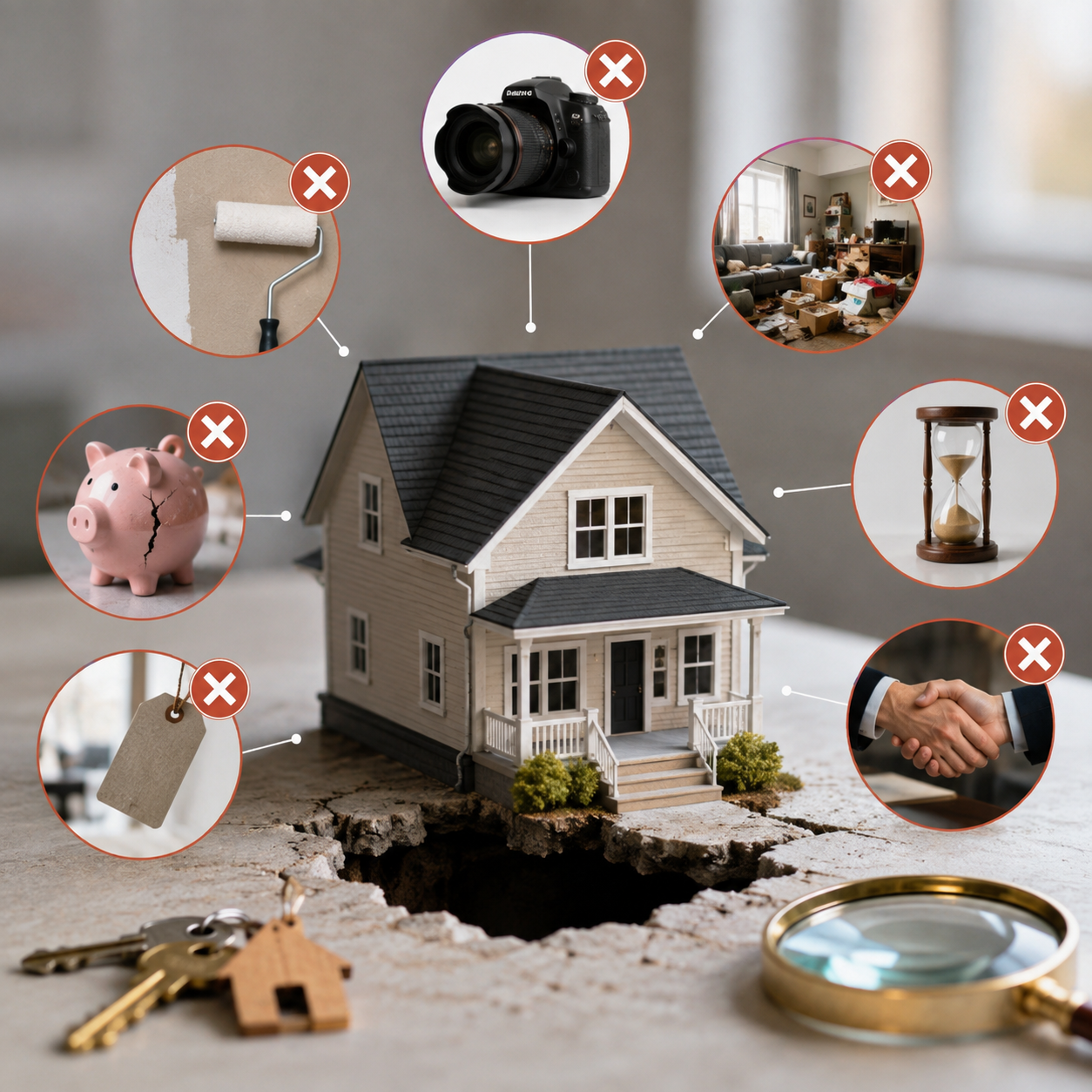

Key Takeaways
- Avoiding common home selling mistakes can help you protect your home’s appeal, attract serious buyers, and make the selling process easier to manage.
- Smart pricing, careful preparation, strong presentation, flexible showings, and clear decision-making can help you avoid problems that weaken your position as a seller.
Protecting Your Home Sale From Avoidable Mistakes
Selling your home involves more than listing it and waiting for a buyer. Every choice you make can affect how buyers see your property and whether they decide to take the next step.
Some mistakes when selling a house are easy to notice. Others are less obvious. Poor pricing decisions, weak listing photos, neglected repairs, or limited showing access may quietly reduce buyer interest.
You can avoid many of these problems by looking at your property from a buyer’s point of view. Your goal should be to remove unnecessary concerns and make it easy for buyers to see your home’s value.
The following home-selling tips can help you spot seven common mistakes before they interfere with your sale.
1. Setting An Unrealistic Asking Price
Why Can Overpricing Your Home Hurt Your Sale?
Your asking price is one of the first things buyers notice. If you set it too high, qualified buyers may decide your property isn’t worth considering.
An emotional connection to your home can make pricing difficult. You may value improvements, memories, or special features more highly than buyers do. Buyers usually approach the property differently. They compare what they see with other available homes and decide whether the asking price feels reasonable.
Overpricing can create several problems:
- Your home may attract fewer interested buyers.
- Buyers may choose competing properties instead.
- Serious buyers may hesitate to arrange a viewing.
- Later price changes can affect how buyers view the listing.
- Your negotiating position may weaken.
When selling your home, base your pricing strategy on relevant market conditions and the property’s overall position. A realistic starting point can encourage stronger interest without unnecessarily limiting your options.
2. Listing Before Your Home Is Ready
What Should You Fix Before Selling A House?
Listing your home too soon is another common home-selling mistake. Buyers often notice small maintenance problems because they are actively looking for reasons to compare one property with another.
Loose handles, damaged surfaces, poor lighting, visible wear, unfinished repairs, and other minor problems can affect the overall impression of your home.
You do not necessarily need to redesign the entire property. Instead, focus on visible issues that could make buyers question how well you’ve maintained the home.
Walk through every room as though you were seeing it for the first time. Check walls, floors, doors, fixtures, storage areas, and exterior spaces.
A well-prepared property can feel more cared for. It also lets buyers focus on the home’s useful features rather than a growing list of things they think need attention.
3. Ignoring Clutter And Home Presentation
How Does Presentation Affect Potential Buyers?
Buyers need enough visual space to imagine themselves living in your home. Excess furniture, crowded counters, overflowing storage areas, and too many personal belongings can make this difficult.
Decluttering does not mean removing every sign that someone lives in the property. It means creating a cleaner and more neutral setting.
Before listing, consider:
- Clearing unnecessary items from countertops.
- Organizing visible storage areas.
- Removing furniture that makes rooms feel crowded.
- Keeping entrances clean and welcoming.
- Reducing distracting personal items.
- Cleaning rooms thoroughly before photographs and showings.
Good presentation supports your overall home selling strategy. It helps buyers focus on room size, layout, storage, natural light, and other property features.
4. Using Weak Listing Photos And Marketing
Why Are Listing Photos So Important When Selling Your Home?
Many buyers first encounter your property through a listing. This means your photographs and property description can influence whether they decide to learn more.
Dark, unclear, poorly framed, or cluttered photographs can make an appealing home look less attractive. A vague description can create a similar problem.
Your marketing should give buyers a clear and accurate understanding of the property. Images should show important spaces properly. The description should highlight useful features without exaggerated language or unsupported claims.
When preparing your listing, think about the questions a buyer may have. What makes the layout useful? Which areas of the home deserve attention? Are important features easy to identify?
Effective marketing isn’t about making the home appear to be something it isn’t. It is about presenting the property clearly so interested buyers have a reason to explore it further.
5. Making Showings Difficult For Buyers
Could Limited Access Reduce Buyer Interest?
You may prepare the property carefully and create an excellent listing, but buyers still need an opportunity to see the home.
Making showings unnecessarily difficult can become one of the most damaging mistakes when selling a house. Buyers may be comparing several properties. If viewing your home is consistently inconvenient, they may focus on another option.
You should maintain reasonable boundaries, especially when you still live in the property. At the same time, consider how your showing arrangements affect serious buyers.
Create a simple routine to keep the home ready. Keep key spaces organized, deal with everyday clutter regularly, and set up a practical process for leaving the property presentable.
Greater flexibility can make your home more accessible without requiring you to give up control of your schedule.
6. Letting Emotions Control Negotiations
How Can You Stay Objective During A Home Sale?
Selling a home can feel personal. You may have invested effort in maintaining it, improving it, and making it your own. Buyers, however, are making a financial and practical decision.
This difference can matter most during negotiations.
A buyer may question a feature you value. They may request changes or offer less than you hoped to receive. Responding emotionally can make productive discussion harder.
Instead, evaluate the complete offer and your priorities.
Ask yourself whether the buyer appears serious, whether the terms work for your situation, and where you have reasonable room to negotiate.
You don’t have to accept terms that don’t suit you. The goal is simply to separate your emotional attachment from the decisions involved in selling your home.
7. Choosing Real Estate Help Without Enough Research
How Do You Choose The Right Real Estate Agent?
The professional guidance you receive can influence pricing, marketing, communication, showings, negotiations, and many other parts of your sale.
Choosing someone without understanding how they approach these responsibilities can create unnecessary problems.
Before deciding who will assist you, consider asking about:
- Their approach to pricing a property.
- How they plan to market your home.
- How communication will be handled.
- How showings and buyer inquiries are managed.
- Their approach to negotiations.
- What you should expect throughout the selling process.
You should feel comfortable asking questions. Clear communication matters because you need to understand the reasoning behind important recommendations.
Searching for the best real estate agent near me can be a useful starting point, but your decision should go beyond convenience. Look for professional support that fits your property, priorities, and expectations.
Moving Forward With A Stronger Home Selling Strategy
Avoiding these home selling mistakes does not require you to make your property perfect. It requires careful preparation and thoughtful decisions.
Price the property with the market in mind. Deal with visible maintenance concerns. Remove distracting clutter. Present the home clearly in your listing. Make reasonable access possible for buyers. Keep emotions separate from negotiations, and carefully consider the professional guidance you choose.
These steps can help create a smoother experience while protecting your property’s value and appeal.
If you are preparing to sell and want help finding suitable real estate professionals, sign up on Best Real Estate Agent Near Me. Connecting with the right professional can give you clearer guidance as you prepare, market, and sell your home.